This is an older blog post that I originally wrote in 2022. I later placed it into draft while awaiting updates I wanted to make to it, but it became less of a priority and eventually got forgotten about as I was currently focused on growing and offering my seed-raised plants in order to get their genetics into the wider community, and my other blog covered the main info for them. I’m now once again offering a broader range of established clones through my shop and it reminded me about this post and that its contains valuable information. I wanted to get it published again, even though it has not yet been fully updated. I’m currently working on a revised version, which will include additional observations I’ve made while growing each clone, along with the addition of several new ones: Robinson #1, #2, and #3. These are clones of wild-collected specimens from a population of Salvia divinorum known to reliably set seed. If you’d like to be notified when the updated version is published, please email me at info@enchantedplantsnursery.co.uk.
Established Clones and New Seed-Raised Genetics
There are a number of different Salvia divinorum clones that have been circulating for many decades. For example, the most well known one is the “Wasson and Hofmann” clone, gifted to ecologist and psychologist Sterling Bunnell in 1962 by a curandero in Oaxaca, Mexico. For the sake of clarity in this blog, I refer to these long established clones as the “Classic clones.” In 2021, I successfully produced viable Salvia divinorum seeds and raised a number of genetically unique plants from them, something that is widely considered to be extremely difficult, if not nearly impossible. These plants represent new genetics that are valuable to the species, and I will refer to them as the “New clones.” To read more about the Salvia divinorum seed project itself please see my other blog post on it.
“Classic” Salvia divinorum clones
Clone name: Appaloosa
Collector / grower: Sage Student
A variably variegated clone displaying white to pale green patches on the leaves and distinctive white striping along the stems. The plant exhibited stunted growth along with noticeable leaf and stem deformities. When it was first discovered in 1999, Sage Student feared the plant was diseased and, to prevent potential spread, discarded it away from his other Salvia divinorum plants.
Shortly afterward, he reconsidered and realised it may have been a rare and unusual mutation worth preserving, prompting him to return and recover it. Unfortunately, the ultimate fate of this clone is unknown. It remains unclear whether the abnormalities were caused by disease or some other reason such as a somatic mutation.
(Now presumed lost.)
Clone name: Blosser
Collector / grower: Bret Blosser
Also known as the Palatable clone, this plant was collected in 1991 from Huautla de Jiménez in the Sierra Mazateca by anthropologist Bret Blosser. It is noted for being more vigorous in growth than many other classic Salvia divinorum clones.
Clone name: Catalina
Collector / grower: Kathleen Harrison
Also known as KH96, this clone was collected in the Sierra Mazateca in 1996 by ethnobotanist Kathleen Harrison. Its current status is unknown and it is now presumed lost.
Clone name: Cerro Quemado
Collector / grower: Leander J. Valdes III
This is the only surviving clone of three collected by Valdés in the 1990s near the village of Cerro Quemado in the Sierra Mazateca. It is noted for being more vigorous in growth than many other classic Salvia divinorum clones.
Clone name: Julieta
Collector / grower: Daniel Siebert
Also known as DS9902, this clone was collected in 1999 from a Mazatec shaman in Huautla de Jiménez in the Sierra Mazateca. It has been reported to occasionally produce obcordate-shaped leaves. Its current status is unknown and it is now presumed lost.
Clone name: La Fuerza
Collector / grower: Kathleen Harrison
Also known as The Force, this clone was collected in 2001 by ethnobotanist Kathleen Harrison.
Clone name: Luna
Collector / grower: Daniel Siebert
Also known as DS9401L, this clone is notable for its distinctive leaf morphology. The leaves are broader and more rounded than those of most Salvia divinorum clones and feature more deeply serrated margins. It is thought to be a sport derived from the Wasson and Hofmann clone. In addition to its unique appearance, it is more vigorous in growth than many other classic clones, making it a particularly prized and well-regarded plant.
Clone name: Owens
Collector / grower: Jack Owens
Collected in 2003 on top of Cerro Rabón in the Sierra Mazateca. The clone was named in honour of Jack Owens following his death in 2004.
Clone name: Paradox
Collector / grower: Daniel Siebert
Also known as DS9403, this clone was raised from seed in 1994. Early on, it was reported to display lightly mottled leaves; however, it is now thought that this was likely the result of a nutrient imbalance rather than a true genetic trait. Given its relatively fast and vigorous growth, higher nutrient demands may help explain this observed mottling. It is also noted for being more vigorous in growth than many other classic Salvia divinorum clones.
Clone name: Resilience
Collector / grower: Daniel Siebert
Raised from seed in 2002, this is another genetically unique clone produced by Daniel Siebert and distributed among serious Salvia divinorum collectors.
Clone name: Vin Ayautla
Collector / grower: Bob Otis Stanley
Collected in the Sierra Mazateca from the garden of a lesser-known traditional healer. The curandero stated that this plant was of his own provenance and had never previously been shared or taken beyond his garden. With his permission, it was later brought to the United States by Bob Otis Stanley.
The curandero’s garden is described as hidden, extensive, and carefully tended, consisting primarily of local plants that he had known, cultivated, and stewarded over many years.
Clone name: Wasson and Hofmann
Collector / grower: Sterling Bunnell
Also known as Bunnell, this was the first Salvia divinorum clone brought back to the United States and subsequently distributed worldwide. It was gifted to ecologist and psychologist Sterling Bunnell in 1962 by a curandero in Oaxaca, Mexico. The name Wasson and Hofmann was later applied to this clone in 1992 by the now-defunct ethnobotanical company Of The Jungle. They used this name to distinguish it from another clone they introduced that same year, Blosser. This clone is noted for being more vigorous in growth than many other classic Salvia divinorum clones.
“New” Salvia divinorum clones
Clone name: EPN01 aka. Mosaic
Collector / grower: Michael Robinson
Mosaic was the very first Salvia divinorum seed I successfully grew, which makes it especially meaningful to me. However, its early history was accompanied by a great deal of stress and uncertainty. Toward the end of the seed-producing phase, the mother plants began to show signs that something was wrong. After flowering had finished, I attempted to grow them out again, but the new growth appeared abnormal. Fearing the possibility of a viral issue, I made the difficult decision to cut down and dispose of all the mother plants. This raised a further concern, whether the seeds I had invested so much time and effort into producing might also have been affected.
Thankfully, Mosaic turned out to be healthy and fine, it showed zero issues that the mother plants had. Not only that, it has grown into an excellent, vigorous plant with valuable new genetics and potential resistance to viral issues. To read more about the seed project itself, please see my blog post on it.
Clone name: EPN02 aka. Enchanted
Collector / grower: Michael Robinson
Enchanted is a particularly noteworthy clone due to its subtle morphological difference. It produces slightly broader, more rounded leaves than most Salvia divinorum clones, a trait reminiscent of the classic Luna clone. Such variation is exceptionally rare in this species, as the vast majority of clones appear very similar and can be difficult, if not impossible, to distinguish visually.
Because of this, Enchanted represents especially valuable genetics that are distinct from the wider cultivated gene pool. Like the other seed-raised clones from my 2021 project, it has also shown excellent vigour and may possess improved resistance to viral issues. Combined with its unique morphology, this makes it a genuinely prized clone.
Clone name: EPN03 aka. Vigorous
Collector / grower: Michael Robinson
Vigorous was named for its growth rate, from the very earliest seedling stage, it stood out as the fastest and most robust grower of all my seed-raised plants. Even now, it continues to grow at an exceptional pace and outperforms the others. It will be interesting to observe how this advantage holds as the plant reaches full maturity, but so far it shows no signs of slowing down. This clone combines outstanding vigour with valuable new genetics and may also possess improved resistance to viral issues. Taken together, these traits make Vigorous a truly prized clone.
Clone name: EPN07 aka, Purple Prodigy
Collector / grower: Michael Robinson
Purple Prodigy is a particularly special clone. When the original seedling first emerged, its stem displayed a strikingly rich, deep purple coloration, far more intense and extensive than any of the other seedlings grown alongside it. While a few others showed faint purple tones low on their stems, none came close to the depth or saturation seen in this plant.
As the plant matured, the purple pigmentation continued upward along the stem before gradually fading back to green. Even so, this clone at times produces patches of purple at the base of developing branches as they mature and become under load.
Beyond its appearance, Purple Prodigy is an excellent grower with valuable new genetics and potential resistance to viral issues. It is without doubt a prized clone.
Clone name: EPN04, EPN05, EPN06, EPN08, EPN09, EPN10, EPN11, EPN25
Collector / grower: Michael Robinson
All of these clones were raised from the same successful seed batch and have consistently proven themselves to be strong, vigorous growers. Each one is genetically unique, contributing valuable new diversity to a species thought to have an extremely narrow gene pool.
While more subtle in character than some of the standout selections, these clones are still excellent plants in their own right. They are reliable, fast-growing, and rewarding to cultivate, and play an important role in broadening the genetics available in cultivation. Whether you’re adding to an established collection or choosing a single plant to grow, any one of these clones makes a fantastic choice—you won’t be disappointed!
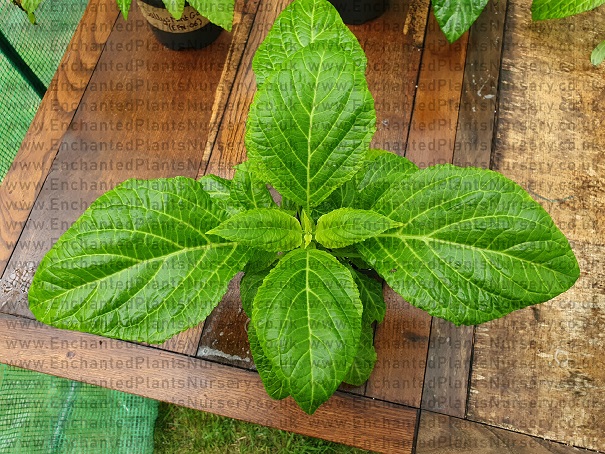
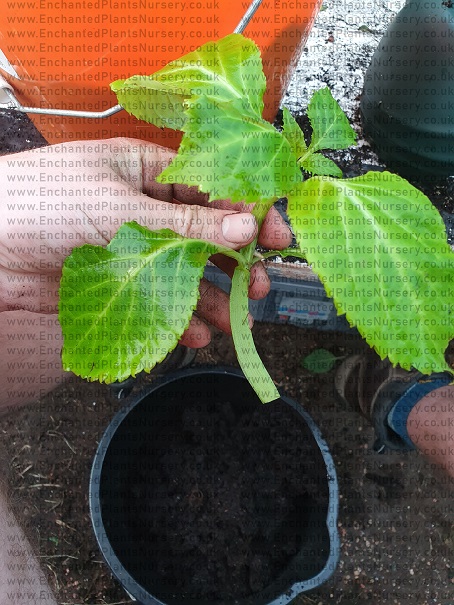
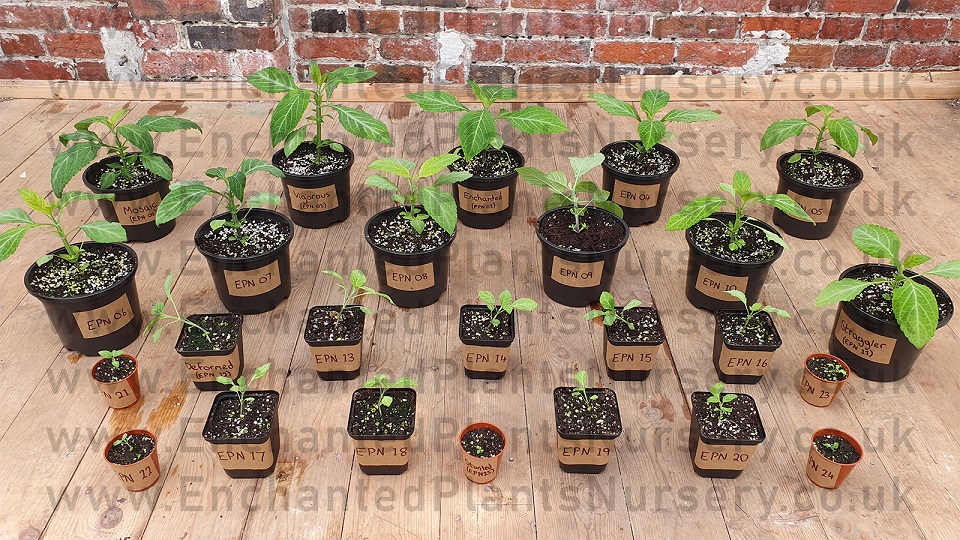
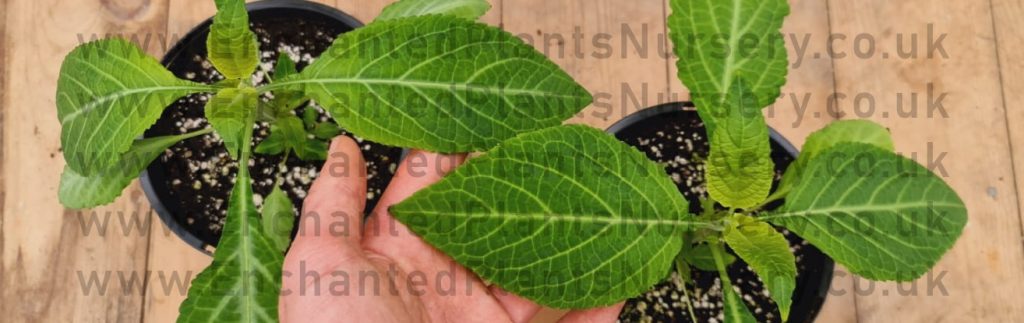
Example photos of different clones we offer.